Trying to choose between Spring Branch West and the Energy Corridor? It is a common question, especially when both areas sit on Houston’s west side and offer easy access to major roads, shopping, and job centers. If you are weighing lifestyle, housing options, and day-to-day convenience, this comparison will help you see where each area stands out and what might fit you best. Let’s dive in.
Spring Branch West vs. Energy Corridor
Before you compare home prices or commute times, it helps to understand that these are not exact apples-to-apples areas. Spring Branch West is a defined City of Houston super neighborhood, while the Energy Corridor is a broader district made up of several residential pockets and mixed-use areas.
That matters because your experience can change a lot from one street or subdivision to the next. Broadly speaking, Spring Branch West feels more residential in character, while the Energy Corridor has a stronger mixed-use identity with office, retail, hotel, and residential space layered together.
What Spring Branch West feels like
According to the City of Houston, Spring Branch West is generally north of I-10 and west of Blalock, with I-10, Long Point, Gessner, and Beltway 8 serving as major transportation routes. City planning describes much of the area as deed-restricted single-family residential, with multifamily housing concentrated along Long Point, Gessner, and Blalock.
In practical terms, that often means you will find more traditional neighborhood blocks, detached homes, and a more established residential layout. If you want a home search centered on single-family options and a neighborhood-first feel, Spring Branch West may be the stronger fit.
What the Energy Corridor feels like
The Energy Corridor District stretches along both sides of I-10 from Kirkwood to west of Barker Cypress and extends south along Eldridge to south of Briar Forest. The district presents itself as a mixed-use environment with access to offices, retail, hotels, residential areas, Buffalo Bayou, Terry Hershey Park, and the Addicks and Barker reservoirs.
For you, that can translate into a more connected live-work-play setup. The Energy Corridor often appeals to buyers and renters who want quick access to employment centers, dining, and outdoor recreation, all within a broader district setting.
Housing options and home styles
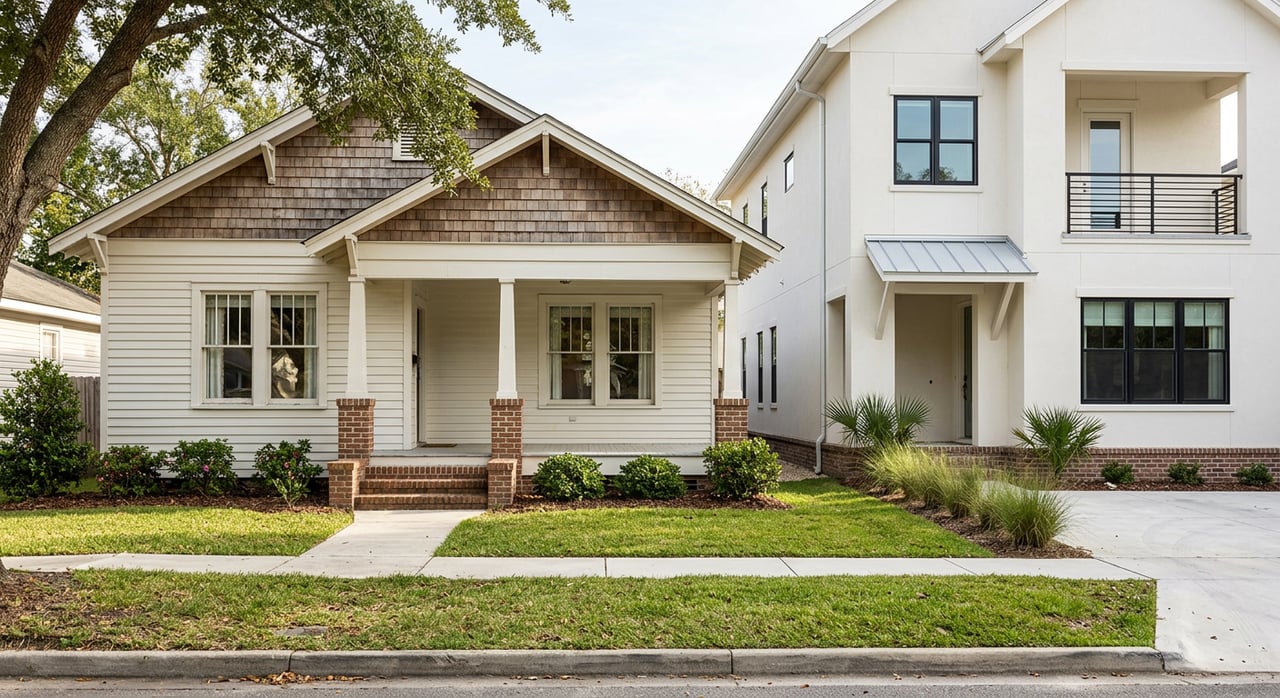
One of the clearest differences is housing mix. Data from Point2 shows Spring Branch West is 49.4% detached housing, with a median construction year of 1977. The same source shows the Energy Corridor at 35.8% detached housing, with a median construction year of 1985 and a larger share of apartment-style buildings.
That means Spring Branch West may give you more detached home options overall, while the Energy Corridor tends to offer more variety in apartments, townhomes, and mixed residential formats. If your priority is a standalone home with a more traditional neighborhood setting, Spring Branch West may rise to the top. If you prefer lower-maintenance living or want more attached-home choices, the Energy Corridor may offer more flexibility.
Ownership and renter mix
The two areas also differ in how people occupy housing. Spring Branch West is almost evenly split between owners and renters, while the Energy Corridor has a higher renter share at 56%, based on Point2 demographic data.
That does not make one area better than the other, but it can shape the feel of the housing stock and turnover patterns. Spring Branch West may appeal more to buyers looking for a larger owner-occupied resale market, while the Energy Corridor may suit people who want more rental or transitional housing choices as they explore the area.
Home prices and monthly costs
If budget is part of your decision, the numbers show a noticeable gap. Redfin market data placed the Spring Branch West median sale price at $450,000 in February 2026, compared with $555,000 in the Energy Corridor.
Spring Branch West also moved faster, with homes selling in 49 days on market versus 78 days in the Energy Corridor. That can suggest stronger pace at the neighborhood level, though your exact price point and property type will always matter.
Official City of Houston housing-value data adds more context for Spring Branch West. In owner-occupied housing, 40.5% of homes fall in the $300,000 to $499,999 range, 22.8% fall in the $500,000 to $999,999 range, and 2.8% are $1 million or more, according to the city housing value report.
Monthly housing costs also trend lower in Spring Branch West. Point2 reports average monthly housing costs of $1,477 in Spring Branch West versus $1,626 in the Energy Corridor, with lower gross rent as well.
Newer homes and infill potential
Even though Spring Branch West has an older median construction year, the data shows a larger 2020-or-later infill tail than the Energy Corridor. That suggests you may find newer construction layered into an older housing base.
For buyers, that can be useful if you want options. You may be able to compare established resale homes, updated properties, and some newer infill opportunities within the same general area.
Commute and mobility
Both areas are strongly car-oriented, which is typical for much of west Houston. In Spring Branch West, 81.9% of workers commute by car, truck, or van, while 11.6% work from home, according to the City of Houston transportation data.
In the Energy Corridor, Point2 reports that 93.7% of residents travel by personal vehicle, with an 18-minute average commute time. The district also highlights a transportation advantage through Addicks Park and Ride and METRO access, noting that downtown Houston is about 30 minutes away via I-10 and the Texas Medical Center is about 40 minutes away via Beltway 8 and I-69.
If you work in or near the district, the Energy Corridor may offer a smoother daily routine. If your travel patterns are more spread across Houston, Spring Branch West can still be appealing because of its central west-side access to I-10, Gessner, Long Point, and Beltway 8.
Shopping, dining, and daily convenience
Spring Branch West has strong practical retail access. City sources note retail concentration along Gessner, Long Point, and I-10, with large-format shopping near Bunker Hill and I-10 that includes Costco, Best Buy, H-E-B, and Academy.
That setup can make everyday errands simple. If your priority is easy access to grocery runs, household shopping, and major road connections, Spring Branch West checks a lot of boxes.
The Energy Corridor offers a denser amenity layer. The district says it has about 300,000 square feet of retail space today and expects that number to grow, while also promoting a broad dining mix, local favorites, and recurring community events through its shopping and dining resources.
If you value having more restaurants, mixed-use activity, and destination-style amenities nearby, the Energy Corridor may feel more dynamic on a daily basis.
Parks and outdoor access
Outdoor access is one of the Energy Corridor’s biggest strengths. The district highlights Terry Hershey Park, Buffalo Bayou trails, and connected hike-and-bike routes designed to link residential areas, business centers, and parks.
Spring Branch West also has nearby green space. City sources point to Energy Corridor Trailhead Park, Haden Park, and Moffitt Park as area recreation options.
If trail access and larger outdoor systems are high on your list, the Energy Corridor likely has the edge. If you want a more residential setting with parks nearby and still appreciate west-side convenience, Spring Branch West remains a strong contender.
Which area may fit you better
Your best choice depends on what you want your daily life to look like. Both areas offer good west Houston access, but they serve different priorities.
Spring Branch West may fit if you want
- More detached home options
- A more residential neighborhood feel
- A somewhat lower median price point
- Lower average monthly housing costs
- Access to established resale areas with some newer infill opportunities
Energy Corridor may fit if you want
- Closer access to corridor employers
- More apartment, townhome, or mixed residential options
- A mixed-use environment with stronger office and retail presence
- More extensive trail and outdoor connectivity
- A lifestyle built around commute convenience and nearby amenities
Why street-by-street comparison matters
This is the key takeaway many buyers miss. Broad area names are helpful, but in both Spring Branch West and the Energy Corridor, the experience can change quickly from one pocket to the next.
The City of Houston’s planning materials note that local conditions vary across Spring Branch West, and that same idea applies to the Energy Corridor’s many residential pockets. If you are serious about comparing the two, it helps to narrow your search to specific subdivisions, housing types, commute routes, and budget ranges instead of relying only on the area label.
Final thoughts on choosing between them
If you want a more traditional residential setting with a larger share of detached homes and a lower median price point, Spring Branch West may be the better match. If you want a more mixed-use environment with strong access to employers, retail, dining, and trail systems, the Energy Corridor may better match your lifestyle.
The good news is that you do not have to figure it out alone. If you want help comparing specific streets, homes, or price points in either area, Lauren Patton can help you narrow your options and move forward with confidence.
FAQs
How is Spring Branch West different from the Energy Corridor?
- Spring Branch West is a defined Houston super neighborhood with a more residential character, while the Energy Corridor is a broader mixed-use district with multiple residential pockets along a major employment corridor.
Is Spring Branch West more affordable than the Energy Corridor?
- Based on the research provided, yes. Spring Branch West had a median sale price of $450,000 in February 2026, compared with $555,000 in the Energy Corridor, and it also showed lower average monthly housing costs.
Does the Energy Corridor have more apartments and townhomes?
- Yes. The data shows the Energy Corridor has a lower share of detached homes and a larger share of apartment-style housing than Spring Branch West.
Is Spring Branch West better for detached homes?
- It may be a better fit if you want more detached home options, since Spring Branch West has a higher share of detached housing than the Energy Corridor.
Which area has better outdoor access, Spring Branch West or the Energy Corridor?
- The Energy Corridor stands out for outdoor access because it connects to Terry Hershey Park, Buffalo Bayou trails, and a broader hike-and-bike network, though Spring Branch West also has nearby park access.
Should you compare homes by area or by subdivision in west Houston?
- Subdivision-by-subdivision and street-by-street comparison is often more useful, because both Spring Branch West and the Energy Corridor can vary significantly within their broader boundaries.