Do you work in Houston’s Energy Corridor and want to cut your drive without giving up value or convenience? You are not alone. Many professionals look at Spring Branch West because it sits near key highways and offers a range of homes. In this guide, you will learn how the commute really works, what a 15-minute target looks like, and how to search smart so you do not waste time. Let’s dive in.
How the commute works
Spring Branch West connects to the Energy Corridor primarily along I-10, also known as the Katy Freeway. For most commuters, this is the most direct and fastest route. Beltway 8, the Sam Houston Tollway, is a secondary option that helps you reach offices spread north or south of I-10 or reroute around slowdowns.
Local arterials handle the last mile. Roads such as Memorial Drive, Bunker Hill, Gessner, and Dairy Ashford help you reach office parks that sit off the freeway. Your exact office address matters because the final few turns can add time during peak periods.
Typical drive times to expect
Off-peak drives from many parts of Spring Branch West to central Energy Corridor locations often run about 10 to 20 minutes, depending on the exact start and end points. During rush hour, the same trips can stretch to 20 to 45 minutes or more. The biggest swing factors are incidents, construction, and the direction of peak flow.
Reliability varies day to day. Crashes, lane closures, and special events on I-10 can change travel time quickly. If your schedule is flexible, leaving before the peak or after it can help your commute feel much more consistent.
What affects your time
- Proximity to I-10 interchanges from your home
- Time of day and direction of traffic peaks
- Construction or lane restrictions on I-10 or Beltway 8
- HOV, express, or toll choices that trade time for cost
- Employer start and end times, flexible schedules, and hybrid work
Can you hit a 15-minute commute?
Sometimes, especially off-peak and from spots closest to I-10 interchanges. During the morning rush, sub-15-minute trips are less reliable. The safest approach is to test times for your specific home-to-office route using live navigation with the departure or arrival times set to your typical schedule.
If your goal is a consistent 15-minute commute during peak hours, focus on homes very near I-10 access points and verify the route to your exact office address. Small location differences inside Spring Branch West can make a noticeable difference.
Best routes and practical tips
I-10 is your primary corridor and usually the fastest. Beltway 8 can help skirt a slowdown or reach offices located north or south of I-10. For the last mile, expect short hops on arterials like Memorial Drive, Gessner, Bunker Hill, or Dairy Ashford to reach campus-style offices.
Managed lanes or toll options on connecting corridors can trim minutes, but they add cost. If you plan to rely on them, factor in a monthly budget line and test whether they change your peak-time reliability.
Practical tip: Save two or three route options in your maps app and check them at the same time each morning for a week. Look for repeat bottlenecks near interchanges and any construction zones that consistently slow you down.
Housing options that fit commute goals
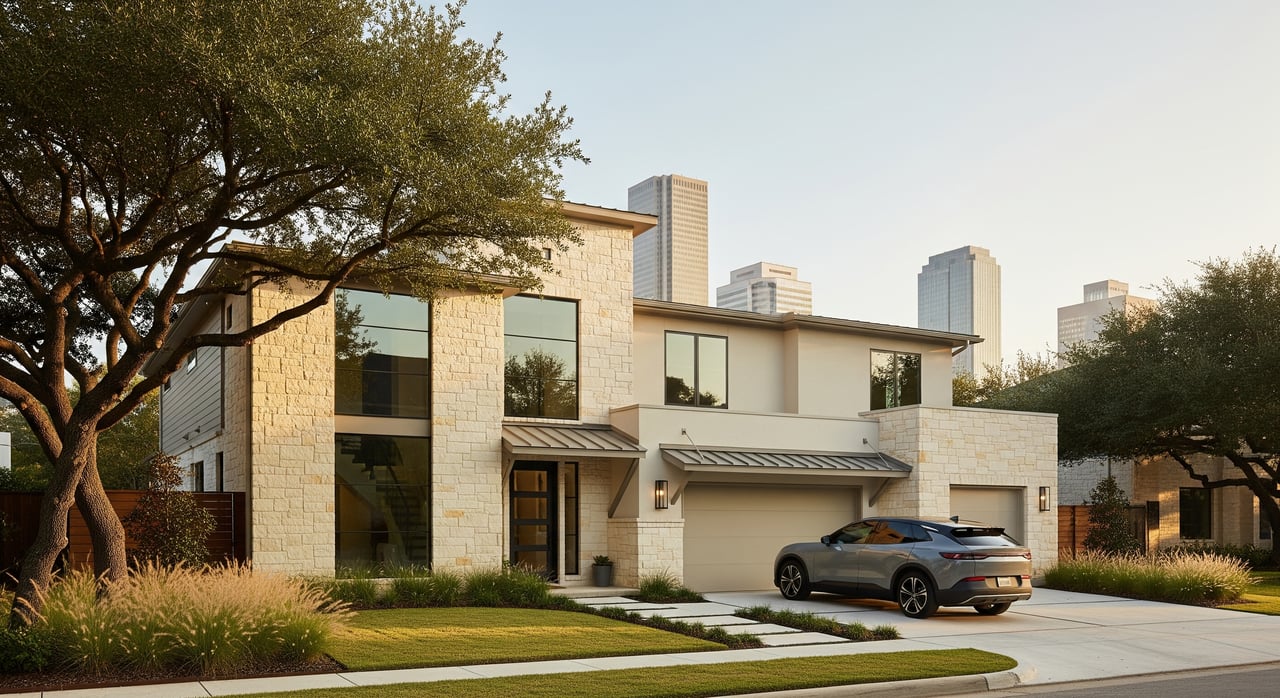
Spring Branch West is a mature, inner-ring suburban area with a wide mix of homes:
- Older single-family ranch homes and modest bungalows on established streets
- New infill construction and rebuilds on older lots
- Townhomes and small-lot communities for lower-maintenance living
- Apartments and duplexes that offer rental flexibility
Affordability is relative and varies by property type. Older single-family homes and some rentals are generally more attainable, while newer rebuilds and townhomes tend to command higher prices. If your priority is a short commute, consider homes closer to I-10 access or townhomes near major arterials.
Inventory moves at different speeds. New builds and well-located townhomes can go quickly, while some older homes that need updates may sit longer. Infill parcels can mean smaller yards, so be clear on your trade-offs between commute time, home size, and outdoor space.
Everyday convenience snapshot
Retail and groceries are plentiful along the I-10 corridor and nearby commercial centers. You can expect easy access to everyday shops and services, with larger retail nodes near Memorial City. Medical services and clinics are located throughout nearby areas, though you should confirm distances for a specific address.
Parks and recreation include neighborhood parks and linear greenways. You will find options for walking, jogging, and cycling for recreation, with proximity that can vary by block.
If schools are part of your plan, parts of Spring Branch West are served by local districts with boundaries that can vary by address. Verify school assignment for any property you consider. Some families align school drop-off with their commute route, which can affect both timing and neighborhood choice.
Transit, biking, and non-driving options
Public transit exists in outer neighborhoods, but many Energy Corridor commutes from Spring Branch West are car-centric. Some employers support shuttles or flexible schedules, which can help reduce peak-time exposure. Park-and-ride can be an option for certain routes, depending on your location and office.
Bicycle commuting to the Energy Corridor is less common due to distance and roadway design. That said, local cycling and trail options can be great for short trips and recreation.
How to search within a 15-minute drive
Start your search with your exact office address. Then use map-based tools and time-of-day routing to build a shortlist that meets your commute target. Here is a step-by-step workflow you can follow:
- Gather your office address and preferred arrival and departure times.
- On your preferred home search portal, filter or draw Spring Branch West and flag homes near I-10 interchanges.
- For each promising listing, open your navigation app, set the correct arrival time, and check the expected drive.
- Repeat for your typical departure time to see the evening pattern.
- Compare I-10 versus Beltway 8 routing and note any repeat bottlenecks.
- Validate reliability by checking the same route on multiple weekdays and by driving it in person if possible.
If you want a more efficient process, ask your agent to run a commute-time search with MLS tools and prepare a route tour during your actual commute hours. That way you can see real-world timing before you make an offer.
A quick commute-testing checklist
- Enter the exact office address and set the arrival time you use on workdays
- Test both morning and evening peak windows for at least three candidate homes
- Note merge points and interchanges that consistently slow the route
- Decide whether toll or managed lanes fit your budget and if they improve reliability
- Add a 10 to 20 percent buffer for peak seasons and weather
Is Spring Branch West a good fit?
If you want a practical commute to the Energy Corridor with access to a mix of home types, Spring Branch West is worth a close look. You may achieve 10 to 20 minutes off-peak and sometimes better from blocks nearest I-10, while rush-hour reliability depends on your exact route and schedule. The neighborhood’s variety of older homes, new construction, and townhomes lets you balance price, maintenance, and location.
If you would like curated listings that meet your commute target and a guided route tour at your actual drive times, connect with local expert Lauren Patton. You will get neighborhood insight, MLS-powered searches, and a plan that fits your timing and budget.
FAQs
How long is the Spring Branch West to Energy Corridor commute?
- Off-peak drives often run about 10 to 20 minutes, while peak periods commonly range from 20 to 45 minutes or more depending on incidents, construction, and exact start and end points.
Can I consistently get a 15-minute commute from Spring Branch West?
- Sometimes, especially off-peak and from homes near I-10 interchanges, but it is less reliable during morning rush; test your exact home-to-office route at your work times.
Which parts of Spring Branch West offer the shortest drives?
- Blocks closest to I-10 access points typically deliver the shortest trips to central Energy Corridor offices, especially when combined with flexible work hours.
Are there good non-driving options to the Energy Corridor from Spring Branch West?
- Public transit is limited for this commute, so most people drive; some employers offer shuttles or flexible schedules, and park-and-ride may work depending on your location.
What housing types should I target for a shorter commute?
- Look at older single-family homes or newer townhomes near I-10 or major arterials, balancing location with your price, space, and maintenance preferences.